
Series · Part 1 of 4
Dinosaur Park: A Building Diary- Published on
Dinosaur Park: designing the game and letting GPT draw the first draft
- Authors

- Name
- Alberto Montalesi
I'm building a new game, and I'm going to write about it as I go instead of waiting until it's done. The working title is Dinosaur Park Builder. The series is just called Dinosaur Park.
This first entry covers what the game is, what it should look like, and how GPT drew the first version of the art.
What the game is
Dinosaur Park Builder is a park management game in the browser, in retro pixel art. You build a park, look after the dinosaurs, and spend what it earns on finding new species.
Three games are behind it:
- Jurassic Park III: Park Builder on the Game Boy Advance, one of my favourite games as a kid and the reason I'm doing this
- Jurassic World Evolution, for ideas like expeditions, research and tourists, in something much smaller
- Retro Zoo CEO, for the look: fine pixel detail, thin outlines and earthy colours
The dinosaurs, art and setting in my game are all original.
The loop is: build habitats, look after the dinosaurs, bring in visitors, fund expeditions, add a new species. What I most want is the moment an animal you discovered takes its first steps in an enclosure you designed.
Each new species should force a new decision, like a different enclosure or food, not just a bigger number.
I'm starting small: one ankylosaurus enclosure that looks right and that you can edit by dragging things around. If that isn't nice to look at, extra systems won't fix it.
The camera is fixed isometric. You can pan and zoom but not rotate, which keeps every sprite in the same projection.
Letting GPT draw the first draft
I'm a developer, not a pixel artist, so I used GPT's image generation for a first version of the art.
I started with the ankylosaurus, in four directions.
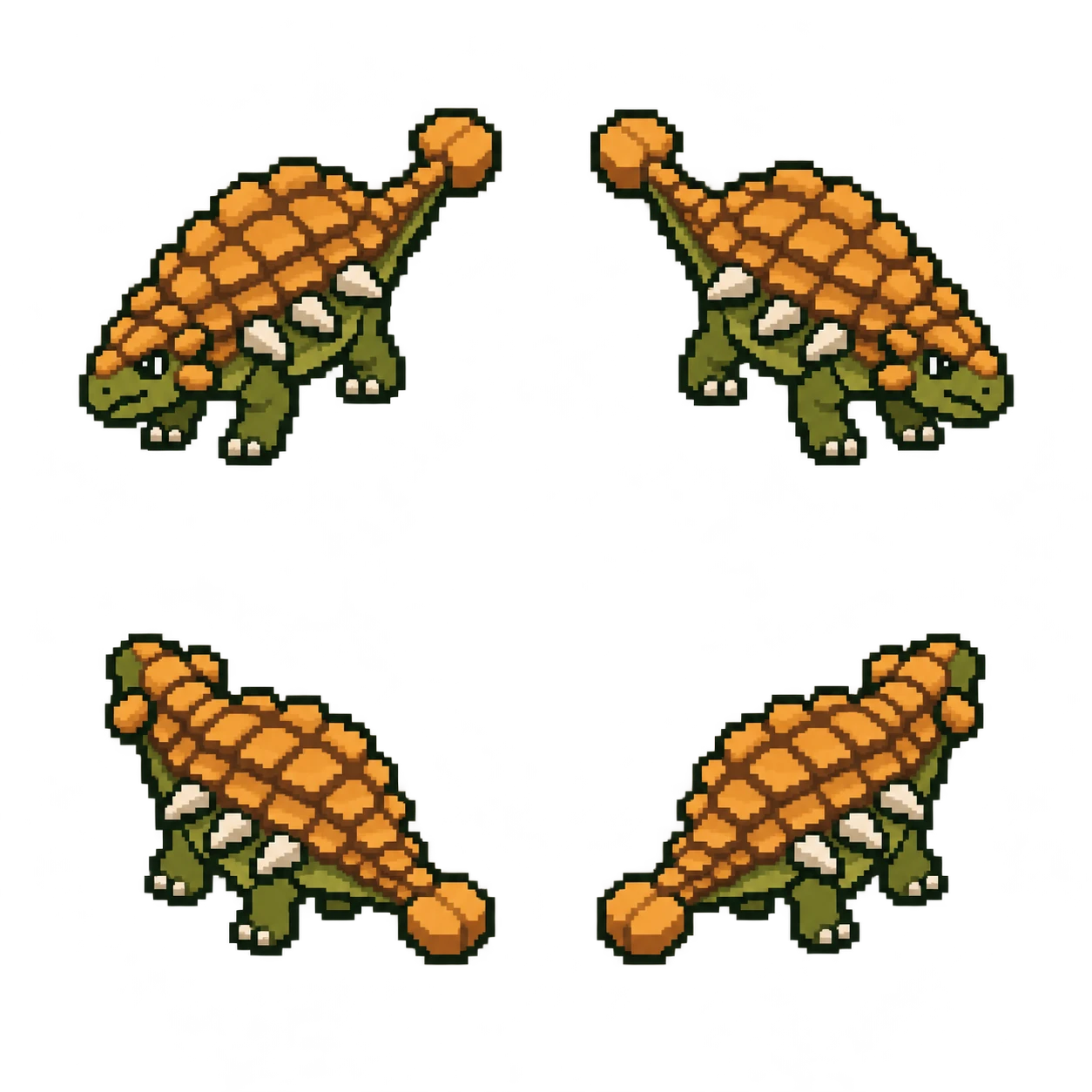
It was fine as a draft, but too cartoony. I'll come back to that.
Then I asked for a sheet of props in the same style. The prompt was long and fussy: exactly nine objects on a 3×3 grid, a small shared palette, light from the upper left and no text.
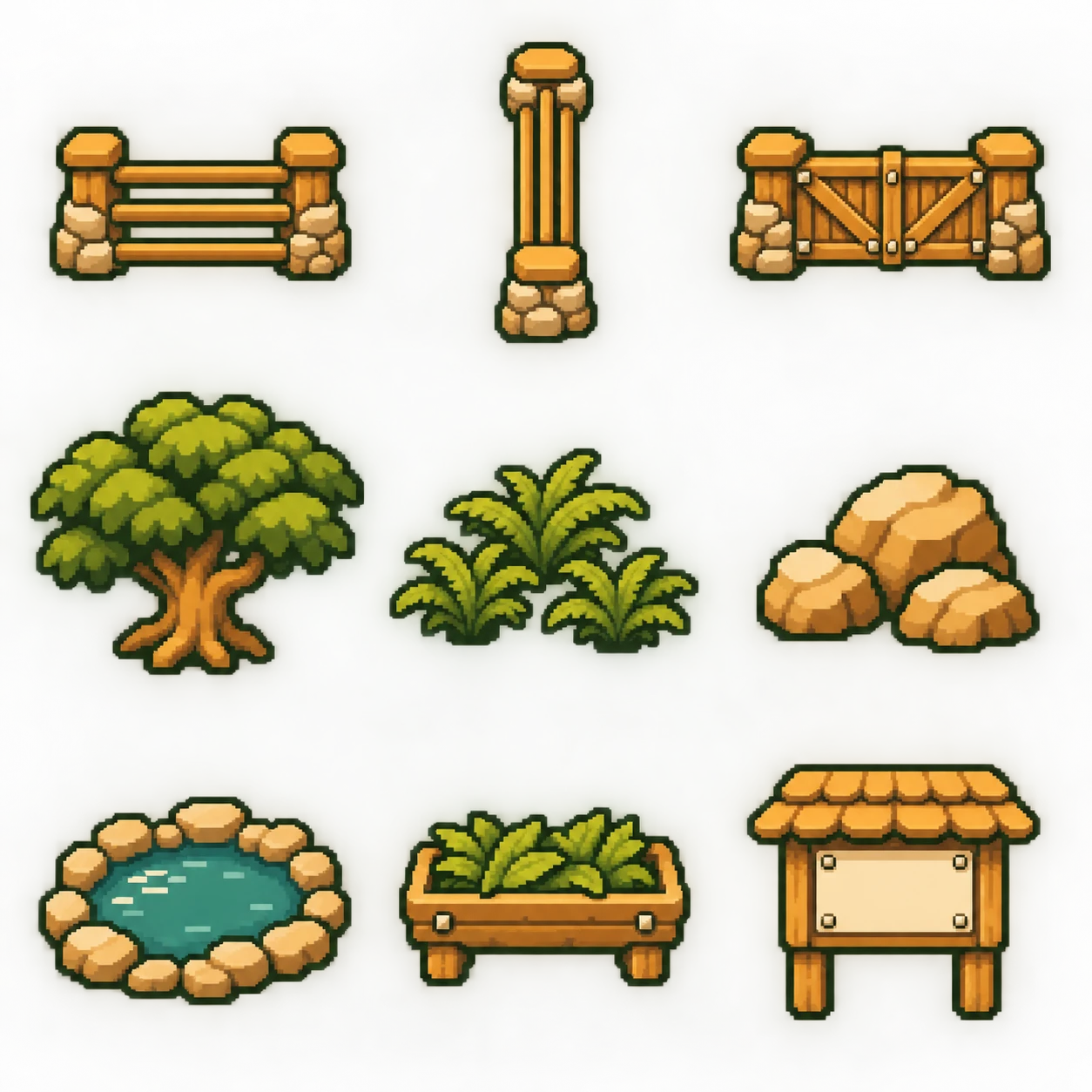
It did well, and the grid made the objects easy to cut out. I did the visitors the same way.
Not usable as it comes
Up close, it isn't real pixel art. The background isn't transparent, the edges have a soft halo, the pixels don't sit on a grid and the colours drift.
So I wrote a bake script. It cuts out each sprite, scales it down to its real size and maps it onto a shared palette. I can re-run it whenever the art changes.
One problem is still open: in the walking animations, small details like the armour plates shift a little between frames.
Choosing the art style
In an enclosure, the first draft looked like a toy. Gold armour, thick outlines and chunky fences weren't the game I had in mind.
So I made a second version based on the Retro Zoo CEO look and compared them.
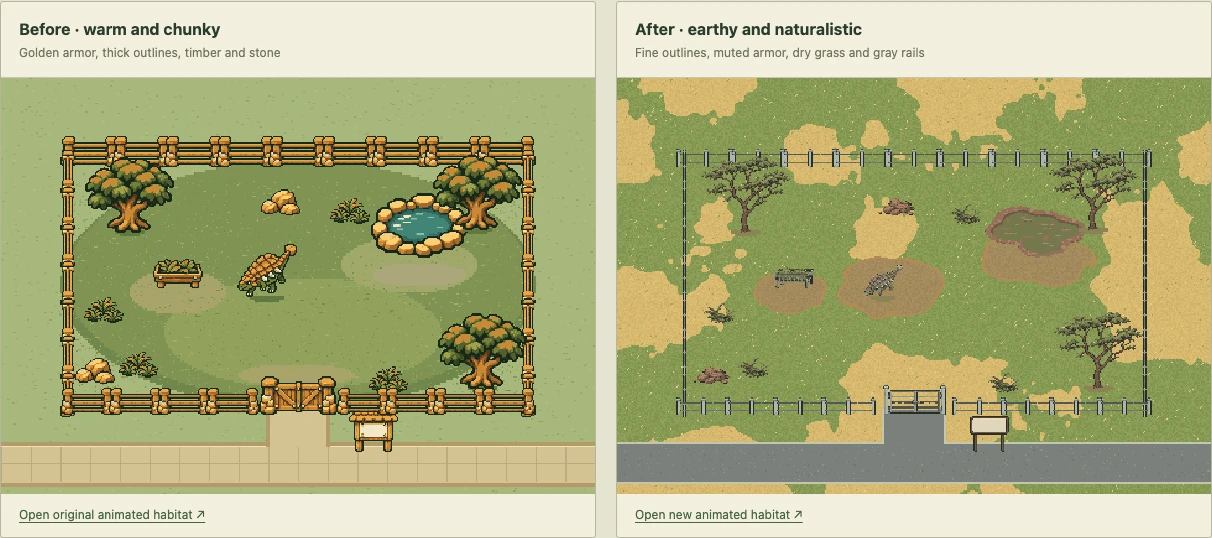
I'm keeping the one on the right. Animals are small and believable, the ground is dry grass and soil, and fences and feeders are plain and practical.
Changing direction was cheap. I asked for a new ankylosaurus and ran it through the same script.

I also switched from a flat overhead view to isometric. It sounds minor, but every fence and sprite now has to follow the diagonal grid.
The final look
This is what ends up in the game, scaled up so you can see the pixels. The ankylosaurus has a four-frame walk, from the front and from behind. The other directions are mirrors.
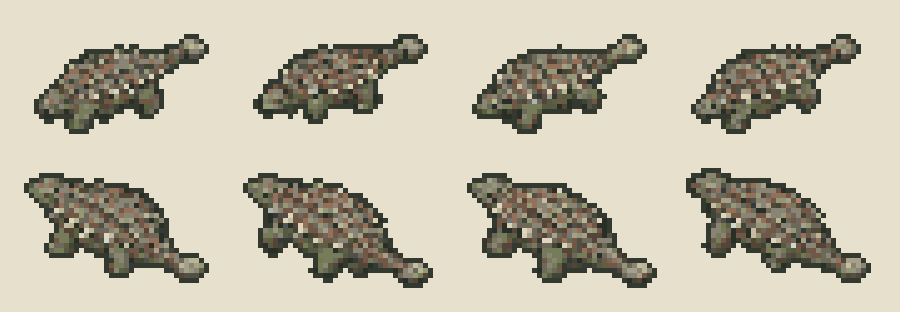
The props are at the same scale as the dinosaur, which is why the ferns and rocks look so small.
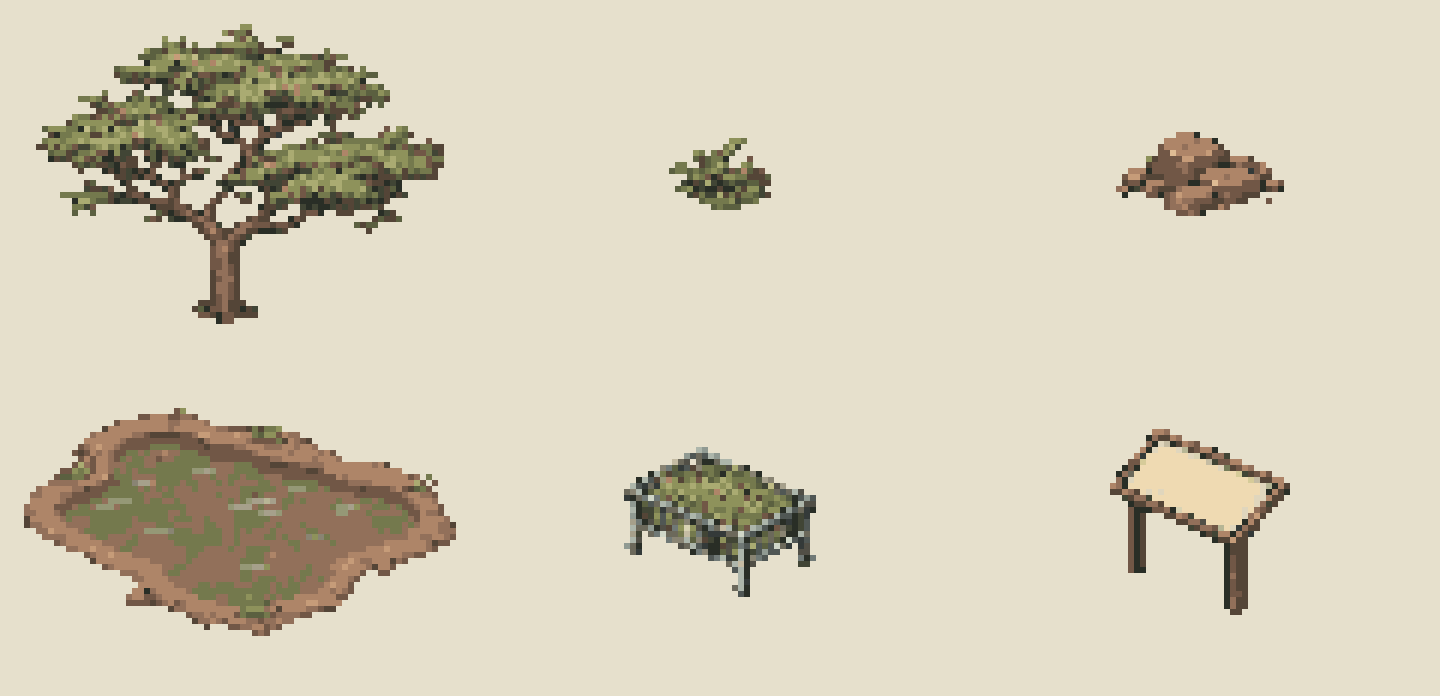
Same idea and pipeline as the golden draft, but quieter, and much closer to what I had in mind.
Where it is now
One editable enclosure. The ankylosaurus walks around its props, and a few visitors walk the path outside.
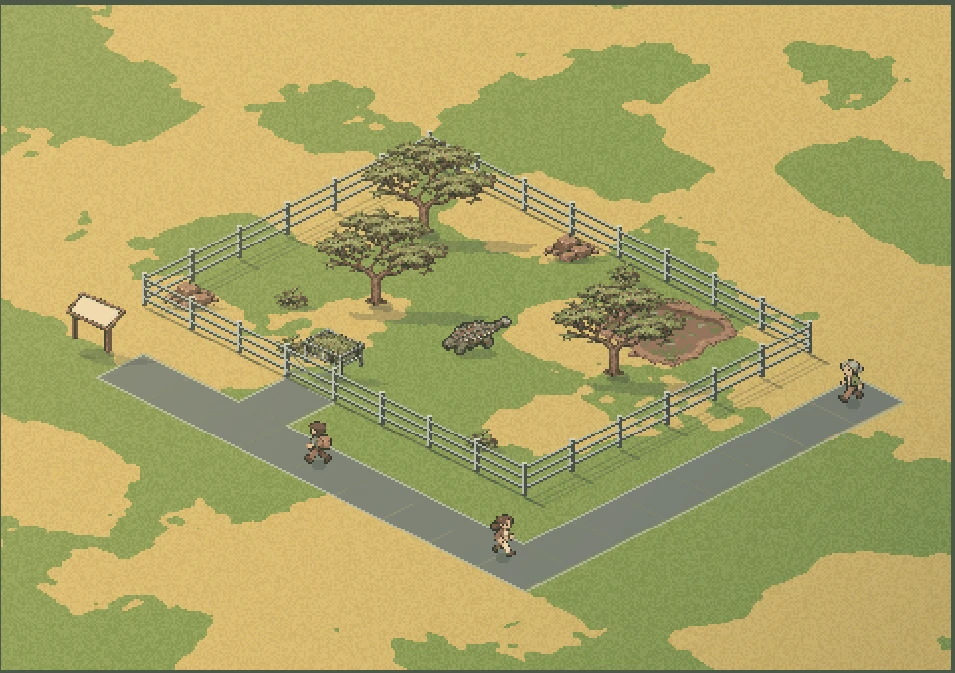
You can drag props in, resize the fence, add paths, and undo and redo.
Later the same day: hunger and a clearer interface
I kept going after writing this, using Claude to add the first care mechanic.
The dinosaur now gets hungry. Feeders run out and need refilling, and a dinosaur left hungry too long gets sick. The inspector tells you what's wrong, like an empty or blocked feeder.
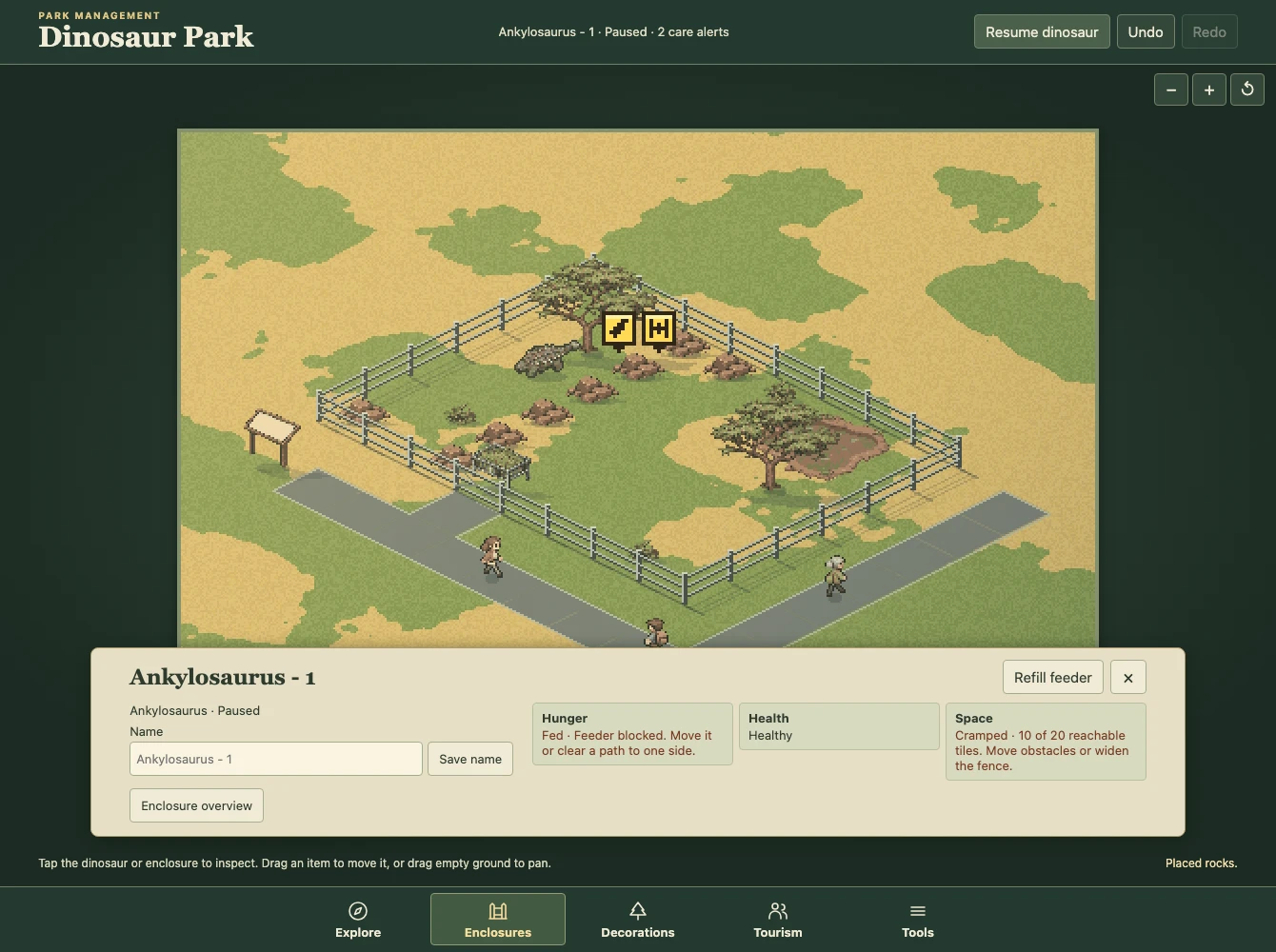
Problems now show up as yellow bubbles on the map, and tapping one opens the inspector. The map fills the screen, and the menu icons have labels.
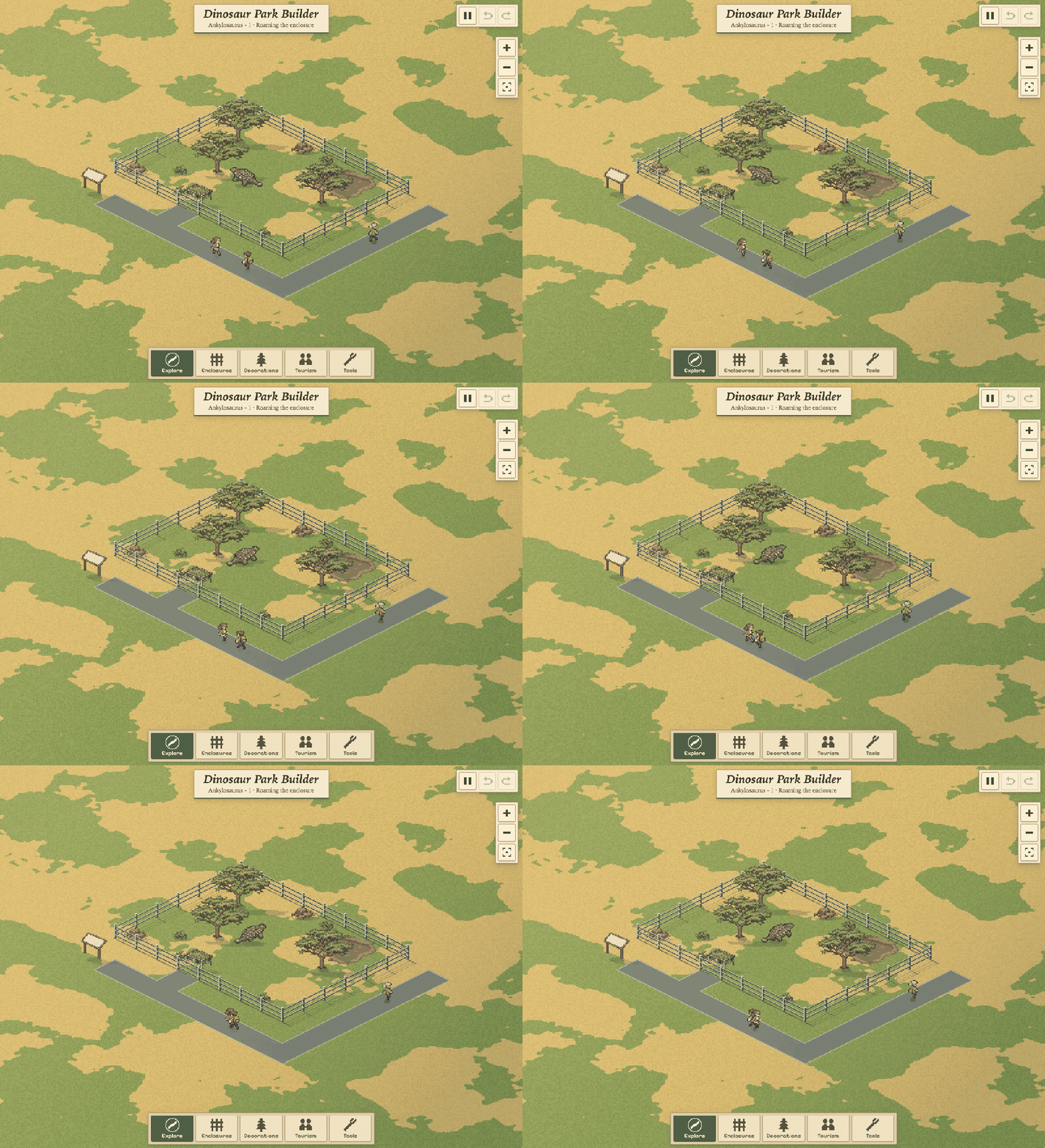
The visitors are still decoration. There's no money, weather or expeditions yet. This is the park today:
Still undecided
The final title, the story behind the dinosaurs, how tough the money should be, which species come next, and whether cleaning fossils becomes a minigame.
Next time: finding out whether a new player can work out an empty feeder without being told.
Recommended Tools
These are affiliate links. Using them helps support this site at no extra cost to you.
Did you find this useful?
0 readers found this helpful